If you have ever opened your car door after it has been sitting in the Parker sun, you already know how brutal that first wave of heat can feel. At Messer Window Tinting, we hear this question all the time: how much cooler does window tint make your car?
The honest answer is that the Window Tint Cooling Effect can be substantial, especially when you choose a high-performance film designed for heat rejection rather than appearance alone. While the exact results depend on your vehicle, the type of film you choose, and how much direct sun your car gets, quality tint can make your cabin noticeably more comfortable, reduce harsh glare, and help protect your interior from long-term sun damage.
For drivers in Parker, this matters even more. Colorado sunshine is intense, and when your car sits outside at work, at the store, or in your driveway, heat builds up fast. That is why so many local drivers turn to our automotive window tinting services when they want more comfort on the road and better protection for their vehicle.
Understanding the Window Tint Cooling Effect
When we talk about the Window Tint Cooling Effect, we are talking about how window film helps reduce the amount of solar energy entering your vehicle. Without tint, sunlight passes through your glass, heats your dashboard, seats, and interior panels, and turns your cabin into a heat trap. With the right film installed, a significant portion of that solar energy can be rejected before it causes the same level of heat buildup.
That is why drivers often notice several immediate benefits after tinting their vehicles:
- the cabin does not feel as painfully hot when they first get in
- the steering wheel and seats are less scorching
- the A/C does not have to work as hard to help the cabin feel comfortable
- daily driving feels easier on bright, hot afternoons
Many people assume darker film always means better cooling, but that is not necessarily true. Some lighter, higher-performing films can offer stronger car window tint heat reduction than darker entry-level products. The real difference comes from the film technology, not just the shade.
How Much Cooler Does Window Tint Make Your Car?
This is the question most drivers care about most, and the answer depends on several factors. In our experience, drivers usually notice the biggest difference in overall comfort rather than focusing on one exact temperature number. A properly selected film can reduce heat buildup, improve cabin temperature reduction, and make your vehicle feel far more manageable during Parker’s warmer months.
The actual result depends on:
Type of film
The material and performance level of the tint make a major difference. Basic films can help somewhat, but premium films deliver much stronger automotive window tint heat rejection.
Amount of direct sunlight
A vehicle parked in direct sun all afternoon will naturally build more heat than one parked in shade. Even so, quality tint can still reduce how aggressively the interior heats up.
Vehicle size and glass area
Larger vehicles, SUVs, and cars with more glass often benefit greatly from heat-rejecting film because there is more surface area allowing solar energy into the cabin.
Interior color and materials
Dark interiors tend to absorb and hold more heat. Leather, vinyl, and dark dashboards often feel especially hot after sun exposure, which makes window tint for hot cars even more valuable.
For Parker drivers, this matters year-round, not just in peak summer. Bright sun, glare, and UV exposure are part of everyday driving here. Our post about how window tint benefits Colorado drivers year-round gives a broader look at why local drivers continue to see value in quality tint through every season.
What Type of Window Tint Blocks the Most Heat?
Not all tint is built the same. If your priority is reducing heat, it is important to understand the difference between basic films and higher-performance options.
Dyed window tint
Dyed film can improve appearance and provide some glare control, but it is usually not the strongest option for heat rejection. It can be a budget-friendly starting point, but drivers focused on serious cooling often want more performance.
Carbon or hybrid films
These films generally offer better performance than dyed tint and can be a solid middle-ground option. They improve comfort, help with glare reduction, and offer better long-term performance than lower-end products.
Ceramic window tint
When customers ask us about the best tint for heat reduction, ceramic is often the top performer. Ceramic window tint cooling is popular because ceramic technology is designed to reject a high amount of solar energy and infrared heat rejection without relying on a super-dark appearance.
That makes ceramic a smart choice for drivers who want strong heat control, better visibility, and excellent long-term value. It is also one of the best solutions for people looking for infrared rejecting window film and dependable solar energy rejection window tint.
Why Ceramic Tint Keeps a Car Cooler Than Regular Tint
Ceramic film stands out because it is engineered for performance. Instead of simply darkening the glass, it helps block the types of solar energy that contribute heavily to heat buildup inside the cabin.
In practical terms, that means ceramic film can offer:
- stronger infrared heat rejection
- better solar heat gain reduction
- excellent UV ray protection
- clearer visibility compared to some darker, lower-performing films
This is one reason why darker tint does not always mean cooler tint. We often explain to customers that visible light transmission and heat rejection are not the same thing. A film can look darker but still provide less thermal performance than a lighter, premium nano ceramic film.
If you are comparing options, the better question is not “How dark is it?” but “How well does it reject heat?”
Does Darker Window Tint Always Mean Better Heat Rejection?
No, and this is one of the biggest misconceptions we hear.
Darker tint changes how much visible light comes through the glass, but that does not automatically mean it has better thermal performance. High-quality films are engineered differently, and some lighter shades can outperform darker standard films when it comes to car tint UV and heat protection.
That is why choosing the right film matters more than choosing the darkest one available. The right product should balance:
- heat rejection
- UV protection
- glare reduction
- appearance
- driving visibility
- long-term durability
If you are unsure how to compare those factors, our article on why professional window tinting matters in Parker, CO explains why product quality and installation quality go hand in hand.
How Window Tint Reduces Heat Inside a Parked Car
When sunlight enters untreated glass, the energy gets absorbed by the interior surfaces of your vehicle. Your seats, dash, floorboards, and trim all heat up, and that heat becomes trapped inside. This is where window tint helps.
A quality automotive window film reduces the amount of incoming solar energy and helps slow that heat buildup. That does not mean your car will never get hot again, especially in direct summer sun, but it can mean:
- a less extreme heat spike inside the cabin
- more manageable interior surfaces
- improved comfort when you first get in
- less stress on interior materials over time
That last point matters more than many drivers realize. In addition to supporting cabin temperature reduction, quality tint also helps with interior fade protection. Constant sunlight can wear down leather, fade upholstery, and damage dashboard surfaces. Reducing that exposure helps preserve your vehicle’s appearance longer.
Our blog on the top benefits of car window tinting in Parker, CO explores those broader advantages in more detail.
Why Drivers in Parker Choose Messer Window Tinting
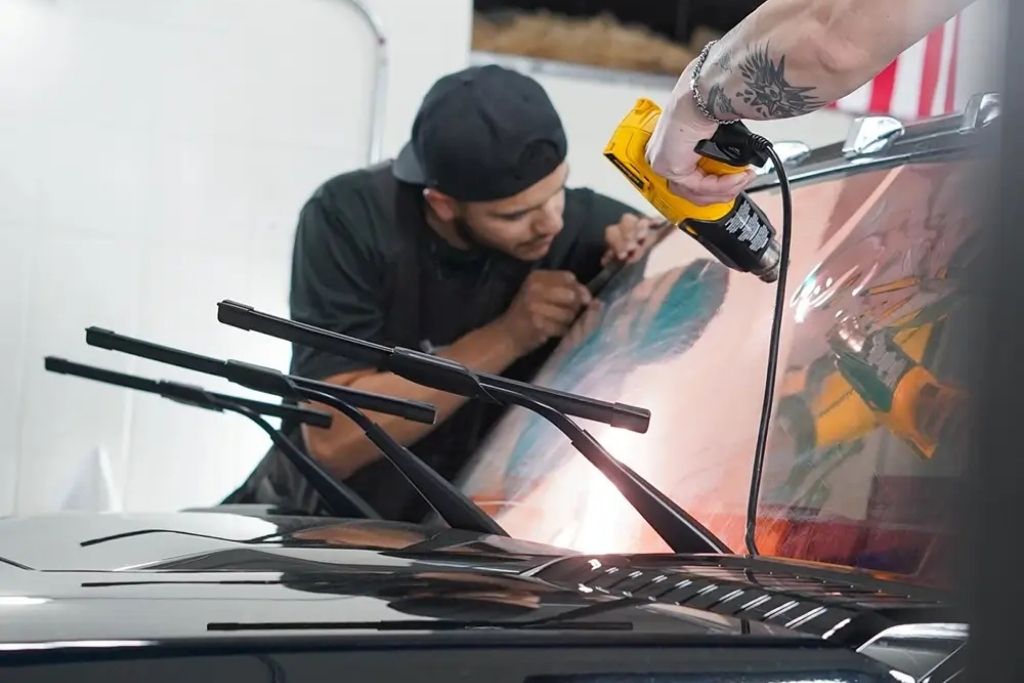
When local drivers come to us, they are usually looking for more than a darker look. They want relief from hot cabins, protection from harsh sunlight, and confidence that the job is done right.
At Messer Window Tinting, we treat every customer like family. Our certified team works with premium products, stands behind our work with warranties, and focuses on delivering results drivers can trust. That combination matters when you are investing in something designed to improve your comfort every single day.
For those ready to move forward, our online booking page makes it easy to schedule an appointment.
Final Thoughts
So, how much cooler does window tint make your car in Parker, CO? In everyday driving, the difference can be easy to feel. The right film can reduce heat buildup, improve comfort, protect your interior, and make getting into your car a lot less miserable on sunny days.
That is the real Window Tint Cooling Effect. It is not just about appearance. It is about choosing a film that delivers meaningful performance where it counts.
For Parker drivers searching for Parker CO car window tint, stronger automotive window tint heat rejection, and lasting comfort, we are here to help. Visit our automotive tinting page, or book your appointment with Messer Window Tinting.
Messer Window Tinting
4.4  321 Google reviews
Window tinting service in Parker, Colorado
Address:
9996 S Twenty Mile Rd, Parker, CO 80134, United States
Phone:
+1 303-483-1904
Reviews
Reviews from the web